

For years, the path to becoming a professional esports athlete was shrouded in mystery. Breaking into top-tier competition required playing twelve hours a day, relying on trial-and-error, and hoping to get noticed in high-rank matchmaking lobbies. Today, that unstructured grind is being replaced by data science, biometric tracking, and targeted performance software.
Advanced analytics and specialized training platforms have democratized skill acquisition, allowing dedicated casual players to analyze, refine, and elevate their gameplay with professional precision.
Aim Trainers: Isolating Mechanical Execution
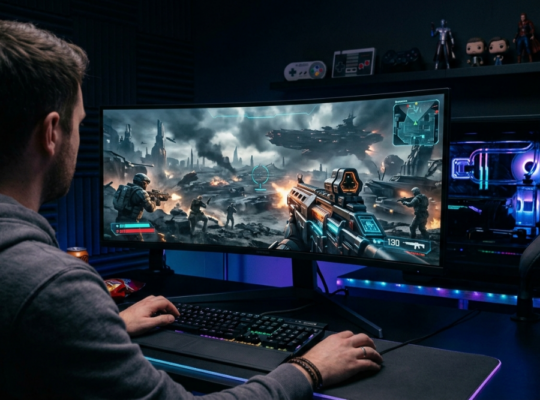
In mechanical titles like Valorant, Apex Legends, and Counter-Strike, winning gunfights comes down to sub-second mouse control and muscle memory. In the past, players could only practice aiming during actual matches—where death often meant waiting minutes for the next round.
Dedicated aim trainers (such as Aimlabs and KovaaK’s) have transformed mechanics into a measurable science:
- Targeted Drill Routines: Players practice flicking, micro-adjusting, tracking moving targets, and click-timing in isolation without the distraction of match objectives.
- Granular Weakness Identification: Algorithms measure reaction times in milliseconds, off-target overshooting, and directional bias (e.g., struggling to track targets moving down and left).
- Heatmaps and Precision Profiling: Data visualizes a player’s “dead zones,” allowing them to calibrate mouse sensitivity and ergonomics based on empirical performance rather than gut feeling.
AI Match Analysis and Tactical VOD Review
Beyond mechanics, high-level esports success relies heavily on game sense, positioning, and decision-making. Historically, reviewing past matches (VOD reviews) was an agonizing process reserved for funded teams with dedicated coaches. Modern AI analytics tools have automated this entire feedback loop.
- Automated Death Audits: AI platforms process match replays to highlight recurring tactical mistakes, such as pushing without utility, over-peeking disadvantages, or mismanaging team economies.
- Heatmap Positioning: Visual overlays show players where they statistically win or lose the most duels across specific map callouts.
- Win-Rate Correlation: Deep data dashboards reveal hidden trends, demonstrating how specific weapon buys, agent combinations, or objective rotations directly impact win probabilities over hundreds of matches.
Biometrics and Physical Performance Optimization
Esports organizations now treat their rosters like traditional Olympic athletes, and that high-performance mindset has trickled down to ambitious casuals. Modern training platforms integrate hardware and biometrics to optimize physical readiness:
- Heart Rate and Stress Monitoring: Wearable tech tracks real-time heart rate variability during clutch situations, helping players recognize when adrenaline is impairing their fine motor control.
- Gaze and Eye Tracking: Advanced hardware maps where a player looks during intense team fights, correcting bad habits like staring at minimaps at inappropriate times or ignoring crosshair placement.
- Sleep and Fatigue Analytics: Data links reaction time fluctuations to sleep quality and session length, proving to players that grinding past midnight actually degrades skill performance.
The Democratization of Professional Coaching
Data-driven insights have created a structured ladder for talent discovery. Amateurs no longer need to rely purely on luck or clout to get noticed. By building verified, public data profiles on performance platforms, rising stars can prove their statistical consistency directly to recruiters, collegiate leagues, and tier-two organizations.
By turning raw gameplay into actionable metrics, esports analytics tools have bridged the gap between casual gaming and professional performance. Winning is no longer just about who plays the longest—it’s about who trains the smartest.