
In recent years, ultrawide monitors have shifted from a niche luxury to a dominant force in PC gaming setups. Defined by 21:9 and 32:9 aspect ratios, these extra-wide displays extend far beyond traditional 16:9 widescreen monitors. But with higher price tags and increased demands on graphics hardware, is upgrading to an ultrawide display truly worth the investment?
The Appeal: Unmatched Immersion and Field of View
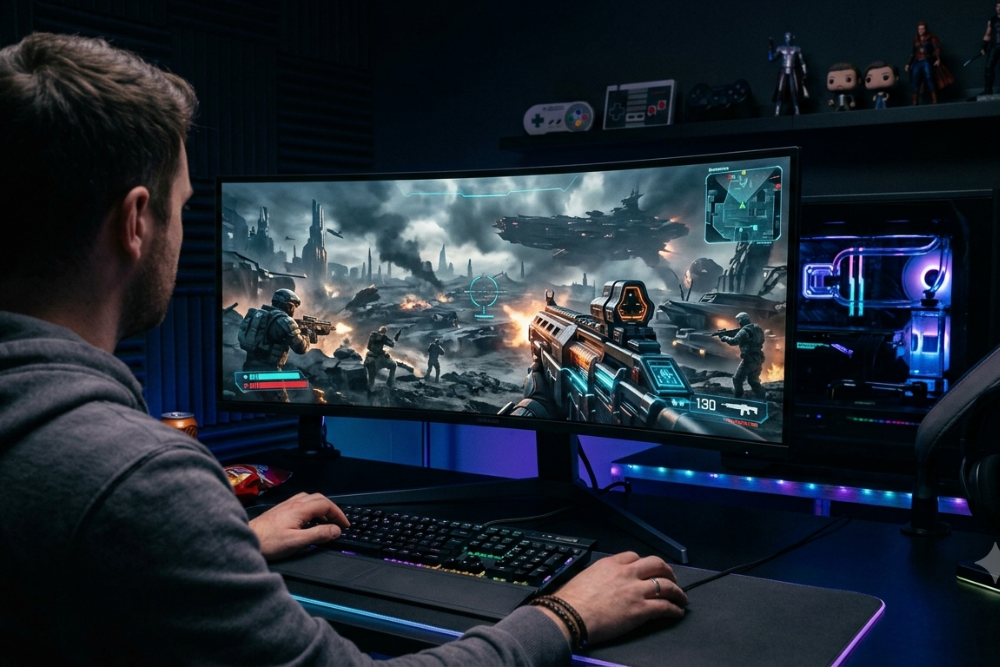
The primary draw of an ultrawide monitor is the sheer peripheral real estate it offers. By expanding your horizontal field of view (FOV), ultrawides wrap games around your vision to deliver an immersive, theater-like experience.
- Open-World and RPG Realism: In titles with sweeping environments, ultrawide displays eliminate black borders and reveal landscape details that traditional screens crop out.
- Flight and Racing Simulators: Simulators benefit enormously from ultrawides, giving drivers and pilots realistic side-window visibility without needing clunky multi-monitor bezels.
- Productivity Bonus: Outside of gaming, a single ultrawide monitor comfortably houses two or three full-sized windows side-by-side, replacing dual-monitor setups with a cleaner desktop footprint.
The Multi-Dashboard Advantage in Modern Gaming
The benefits of ultrawide real estate extend directly into interactive entertainment and digital platforms. Multi-camera streaming suites offer dynamic wide-angle views of live dealer tables alongside simultaneous stat overlays. Similarly, platforms utilize expansive sports-book dashboards and live match streams that take full advantage of 21:9 aspect ratios. On an ultrawide screen, players can view live video, track real-time odds, and manage interactive chats seamlessly without switching tabs or cluttering their primary view.
Key Considerations Before Upgrading
While the visual benefits are undeniable, making the leap to ultrawide requires evaluating a few practical hardware and software factors:
- GPU Demand: Driving extra horizontal resolution requires significant graphics horsepower. A 34-inch Ultrawide QHD display (~3440 x 1440) has roughly 30% more pixels than standard 1440p, requiring a modern GPU to maintain high frame rates.
- Game Compatibility: While almost all modern AAA titles natively support 21:9 ratios, some older games or competitive titles lock aspect ratios to 16:9, displaying black side bars (“pillarboxing”) during gameplay or cutscenes.
- Desk Footprint: Ultrawide monitors require sturdy desks and wider stands. High-curvature displays (like 1000R or 1500R) help keep the edges within comfortable view, but they do occupy deeper desktop space.
The Verdict: Who Is It For?
If you primarily play competitive, fast-paced esports shooters where raw high refresh rates on 24-inch screens take priority, a standard 16:9 monitor remains the practical choice.
However, for gamers who love immersive open worlds, flight simulators, cinematic RPGs, or multi-window platforms, upgrading to an ultrawide display is one of the most transformative hardware upgrades you can make. The seamless, bezel-free field of view delivers a level of immersion that standard displays simply cannot replicate.